Restoring Damaged Photos With AI: 10 Cases, Tested
Last updated
Real archive damage - tears, mould, fading, newsprint dots - and a blunt look at what the tool invents.
Drop your photo here
Free to try · no sign-up · photos are never shared
Release to upload
Why we ran this
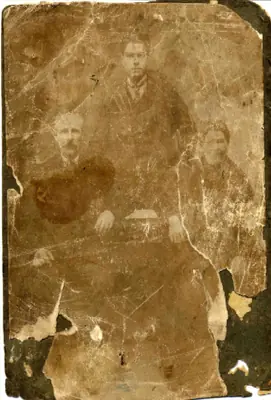
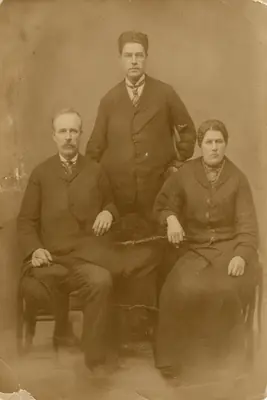
Every photo in this set carries real physical damage from an archive - not simulated scratches added to a clean scan. Each is public domain or CC0, so anyone can download the same input and repeat the test. That matters more here than in any other category, because a restoration that looks convincing and is wrong is worse than one that obviously failed.
How we ran this test
-
Required real damage, not simulated damage
Each input is an actual damaged archive scan - tears with missing emulsion, mould blooms, dye fade, newsprint halftone, motion blur. We rejected clean scans that merely looked old, and we inspected every candidate before selecting it.
-
Kept every input freely licensed and re-downloadable
All ten are Public Domain or CC0 from Wikimedia Commons, and each case names its source file so anyone can fetch the identical input and check our work. No customer photographs were used.
-
Set the bar before the run, including an anti-invention clause
Conditions were written in advance and several explicitly required that features destroyed by damage must not be invented - which is how case C1 came to be scored a failure despite looking impressive.
-
Single pass on the default setting
Every photograph ran once through the live editor on the standard Fast setting on 26 July 2026 with the prompt shown. No retouching before or after, no second attempts.
-
Compared against the original and reported the invention
Each result was checked against its input. Seven met their condition. We also flag one case that passed its condition but should not have - see the limitations below, where we say plainly which part of the rubric was too narrow.
All 10 cases, passes and failures
C1. Heavy scratches and creases - fail
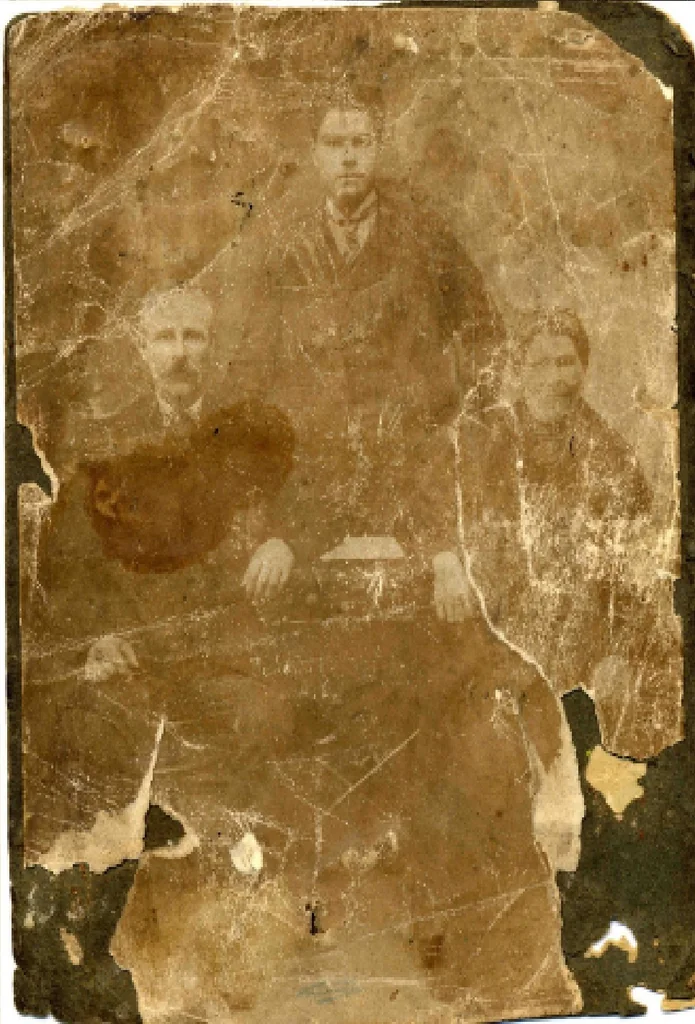
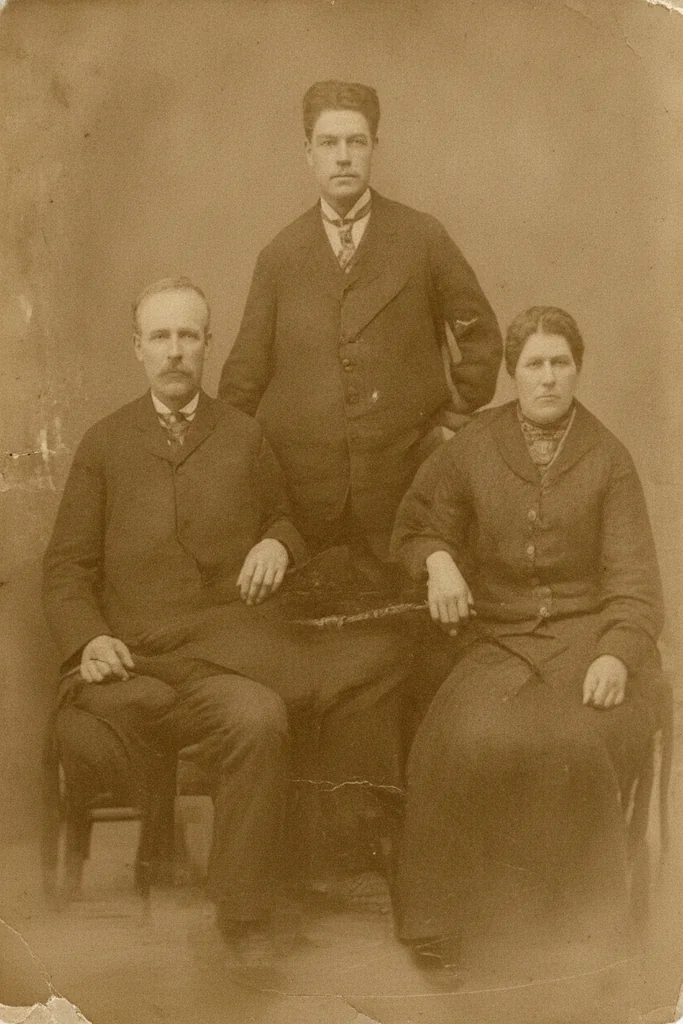
Visually the most dramatic result in the run, and it fails for exactly that reason. The condition forbade inventing features where damage had obscured them, and all three sitters emerge with sharp specific faces that are not readable in the input at all. This is fabrication presented as restoration. Source: File:Pavlo Olelko Yevdokiia Ostrovski.jpg (Public domain, Wikimedia Commons). Success condition set in advance: The scratch network and staining are gone and all three sitters have coherent, undistorted faces - not invented features where damage obscured them.
Restore this damaged old photograph. Remove the scratches, creases and stains, repair the damaged areas and improve the clarity. Keep the people's faces and clothing exactly as they are.
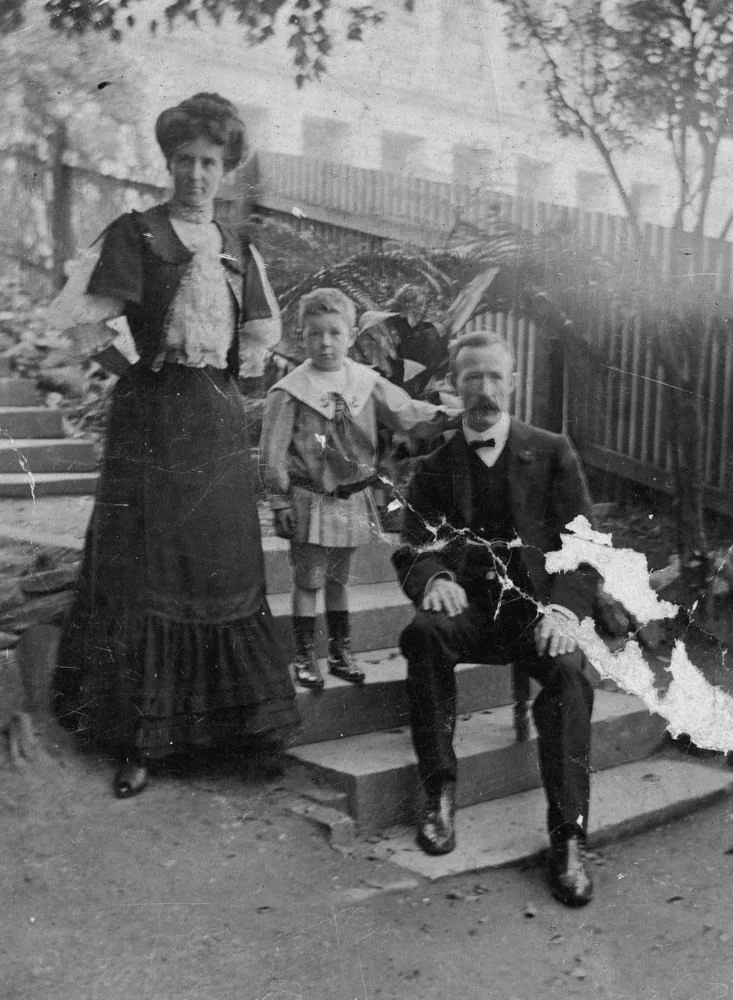
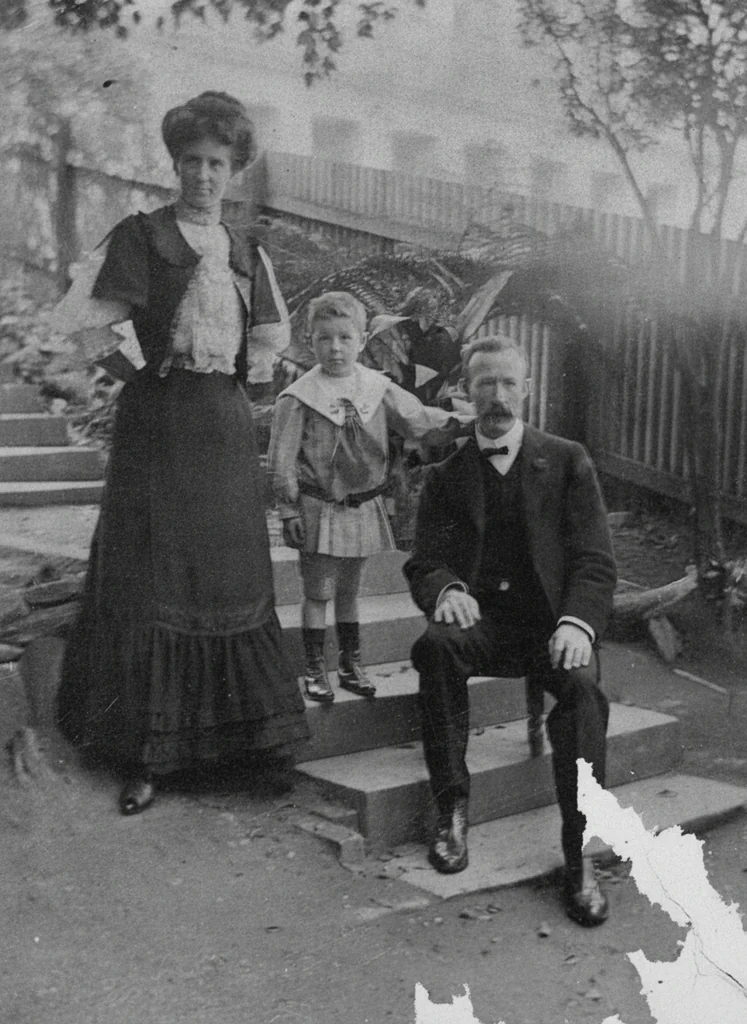
C2. Torn photo with missing emulsion - fail
It repaired the crack crossing the man's body, but the photograph is still visibly torn: a large white missing-emulsion region remains in the lower right, larger and differently shaped than the input's. The tear was relocated rather than repaired. Source: File:StateLibQld 1 75751 C. W. Schaffer and wife Alice.jpg (Public domain, Wikimedia Commons). Success condition set in advance: The torn white gap through the man's torso is filled with plausible continuous clothing, and neither face is redrawn or altered.
Repair this torn photograph. Fill in the missing white areas where the photo is damaged, remove the cracks, and keep both people's faces and clothing as they are.
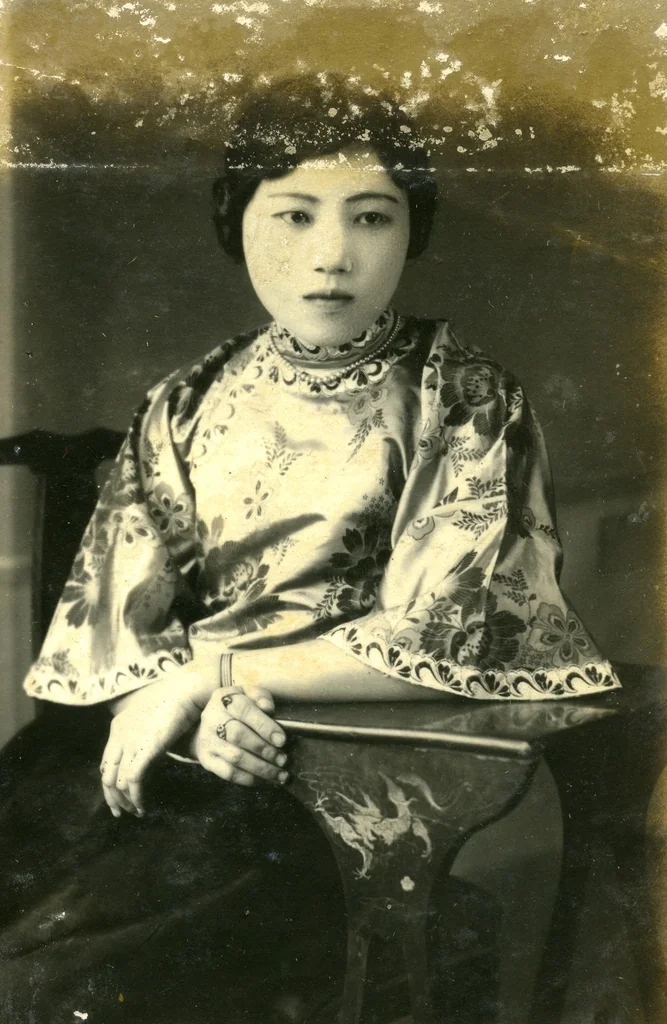
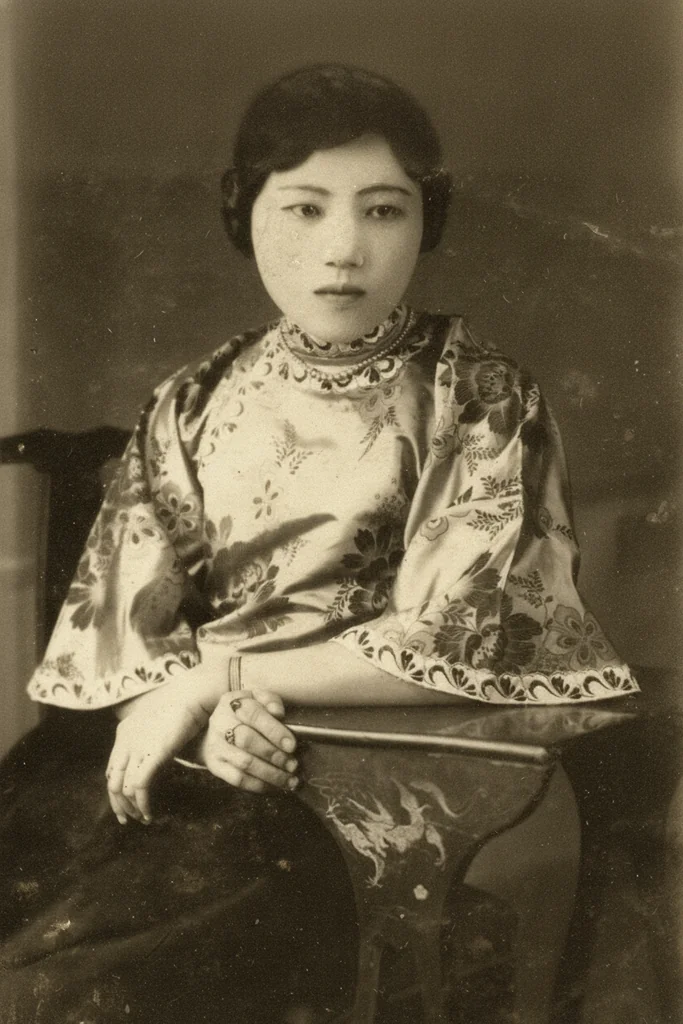
C3. Water damage and mould blooms - pass
The brown tidemark across the top third and the mould blooms over her hair and forehead are both gone, and her facial features are neither erased nor reshaped. A faint diagonal streak survives at upper right. Source: File:Woman in Pongee clothes 1920s.jpg (Public domain, Wikimedia Commons). Success condition set in advance: The tidemark and mould spotting are removed including the spots overlapping her hair and forehead, without erasing or reshaping her facial features.
Restore this water-damaged photograph. Remove the brown water stains and the white mould spots, even out the tone, and keep her face and clothing exactly as they are.
C4. Severe fading - pass
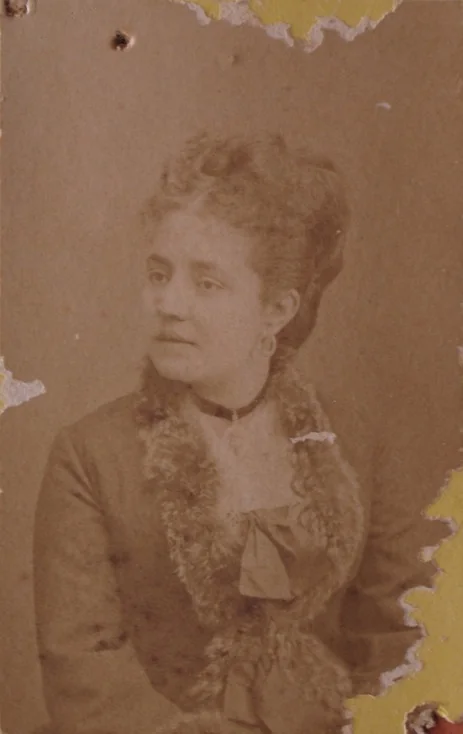
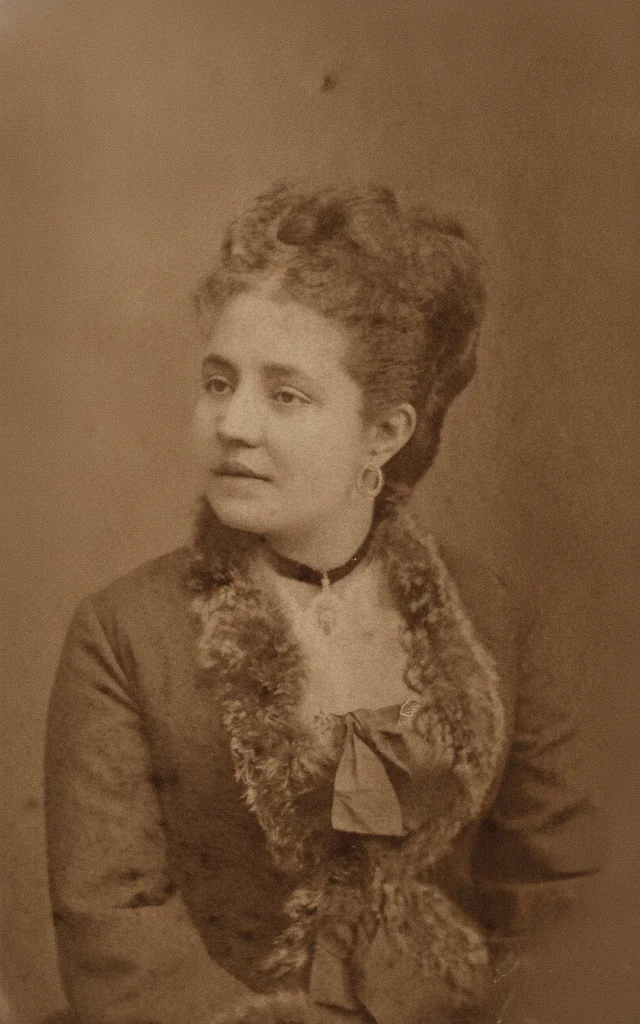
Contrast and mid-tone detail recovered far enough to make the face legible, and the recovered structure matches what is faintly present in the input - hairline, choker with pendant, bow and fur trim all land where the ghost image puts them. Source: File:Retrato da actriz Emilia dos Anjos.png (Public domain, Wikimedia Commons). Success condition set in advance: Contrast and mid-tone detail are recovered so the face is legible, and the recovered features are consistent with what is faintly present rather than invented.
Restore this very faded old portrait. Bring back the contrast and detail, repair the damaged edges, and keep her face and dress as they are.
C5. Colourise a black-and-white portrait - pass
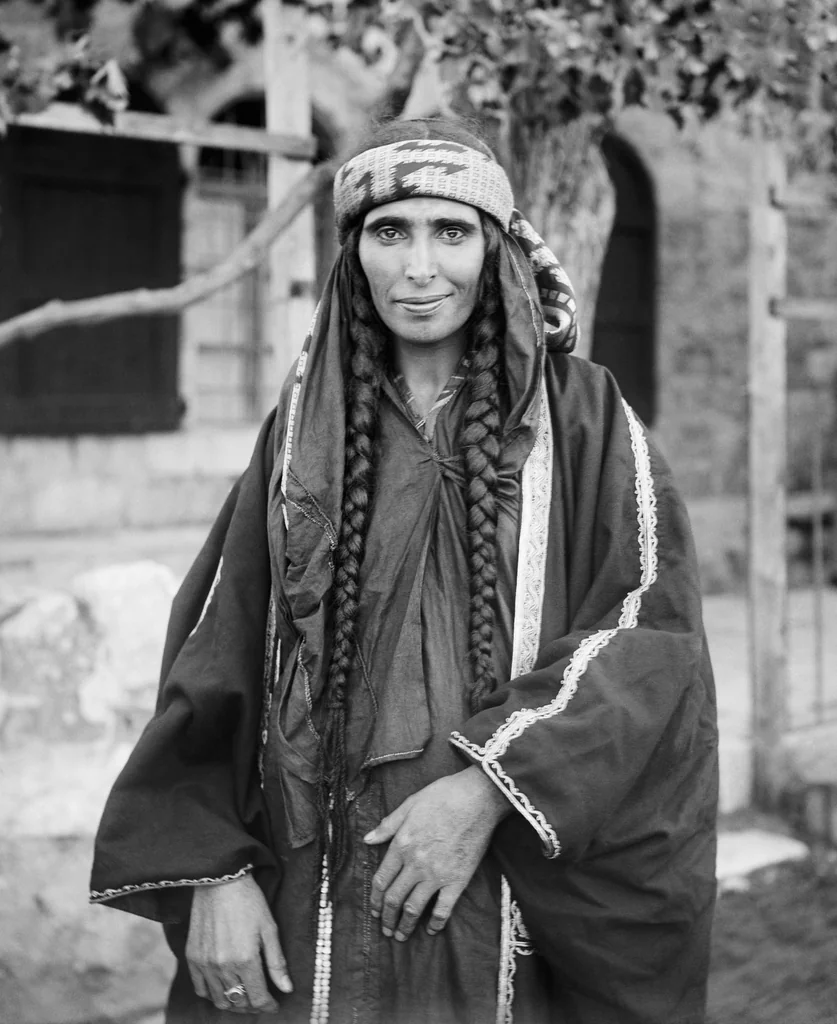
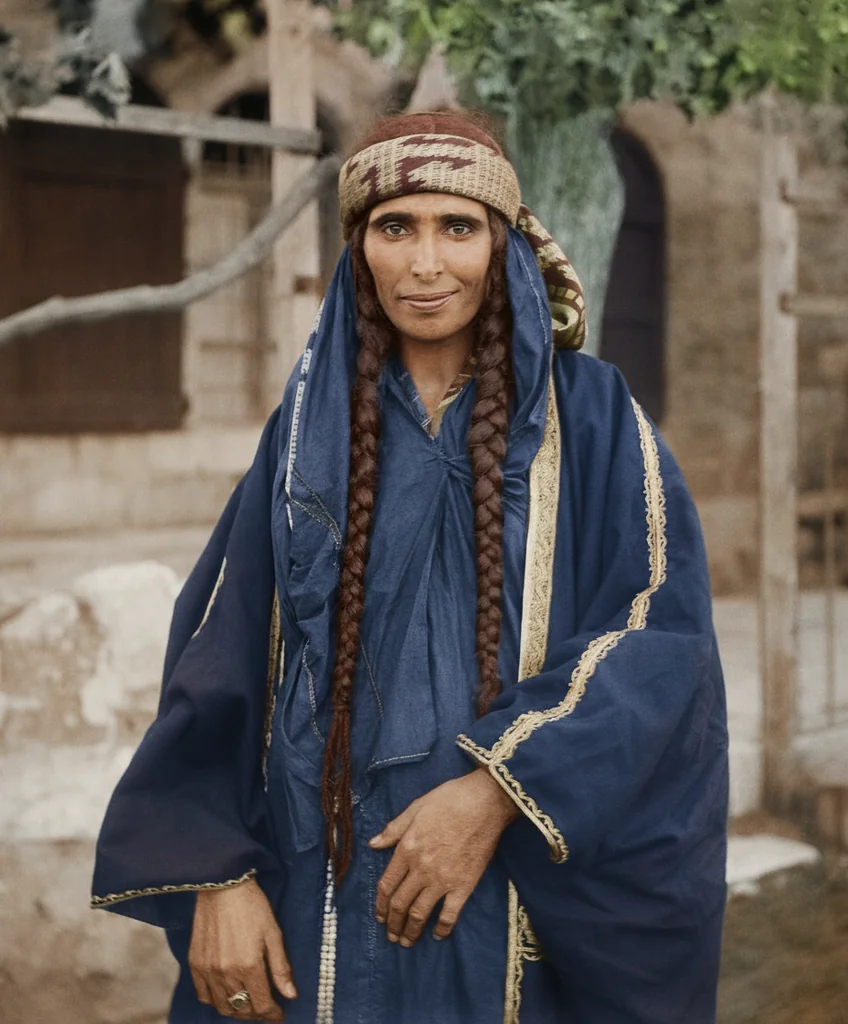
Skin, indigo robe, gold braid trim, hair and the stone building behind all carry plausible distinct colour with no grey patches left and no bleeding across the garment and skin boundaries. Source: File:Bedouinwomanb.jpg (Public domain, Wikimedia Commons). Success condition set in advance: Skin, fabric and background carry plausible distinct colours with no grey patches left, and no bleeding of colour across garment/skin boundaries.
Colourise this black and white portrait with natural, realistic colours. Keep her face, expression and clothing exactly as they are.
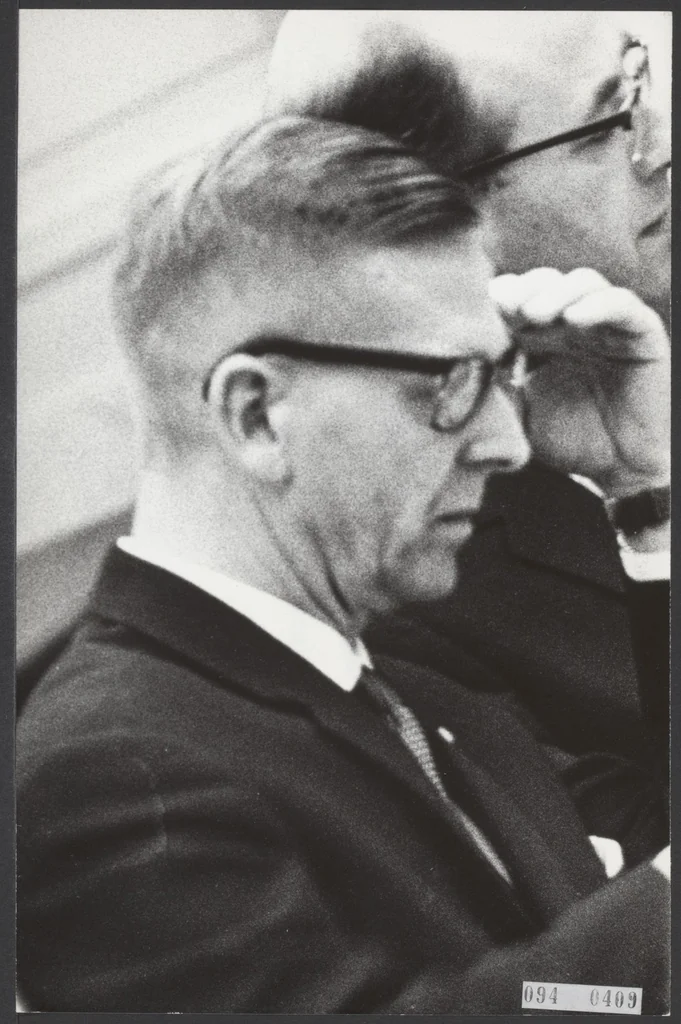
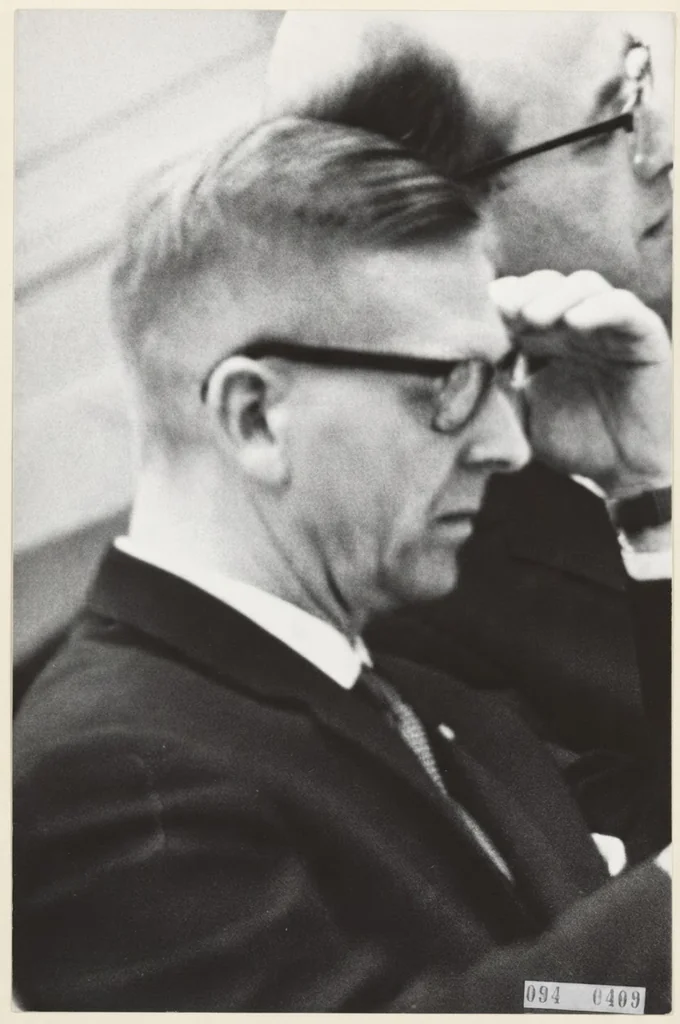
C6. Heavy film grain - pass
Grain is visibly reduced across the suit and background while the glasses, hairline and ear keep their edge detail - it did not resolve into a waxy face, which is the usual failure mode here. Source: File:Waarschijnlijk de nieuwe minister van defensie foto onscherp, Bestanddeelnr 094-0409.jpg (CC0, Wikimedia Commons). Success condition set in advance: Grain is visibly reduced in flat areas such as skin and background while edge detail is retained - not a waxy, smoothed-over face.
Clean up this grainy photograph. Reduce the film grain and noise while keeping the detail sharp, and keep his face exactly as it is.
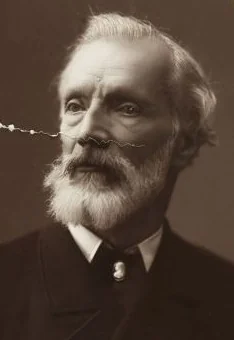
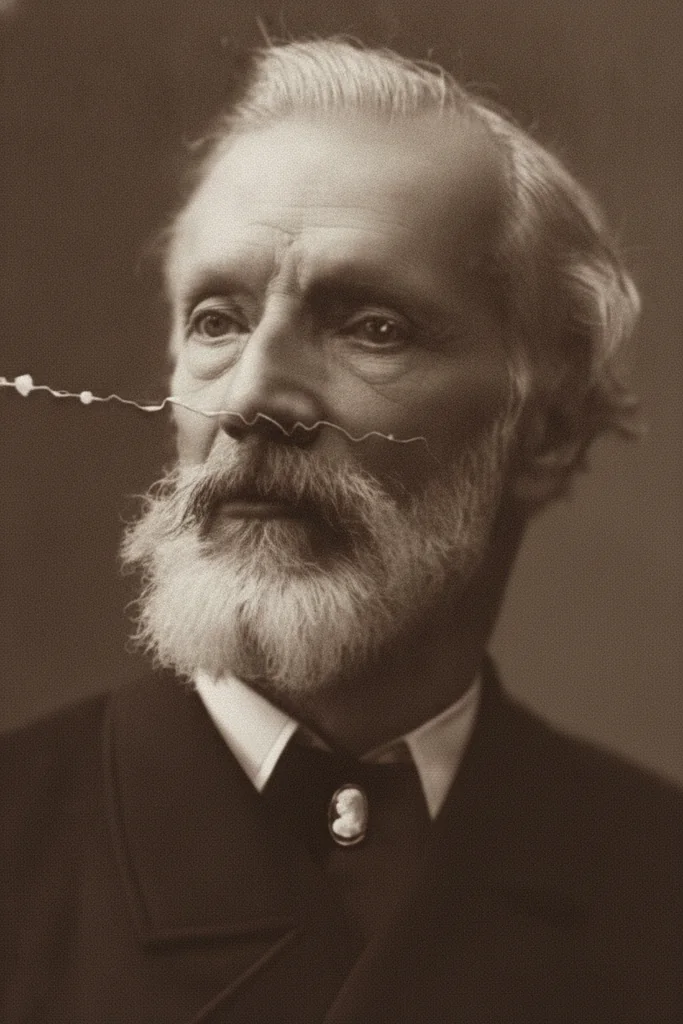
C7. Very low resolution scan - pass
The strongest result in the family relative to input quality: from a 234px scan it resolves individual beard hairs, the eyes and the cameo brooch, and the man is recognisably the same person. The white scratch across his moustache is untouched, which is correct - the prompt did not ask for it. Source: File:Pirou-Bertinot.jpg (Public domain, Wikimedia Commons). Success condition set in advance: Facial features become better resolved than the 234px original, and the resulting face is consistent with the blurry source rather than a different-looking person.
Enhance this small low-resolution old photo. Sharpen the details and improve the clarity of the face while keeping his features the same.
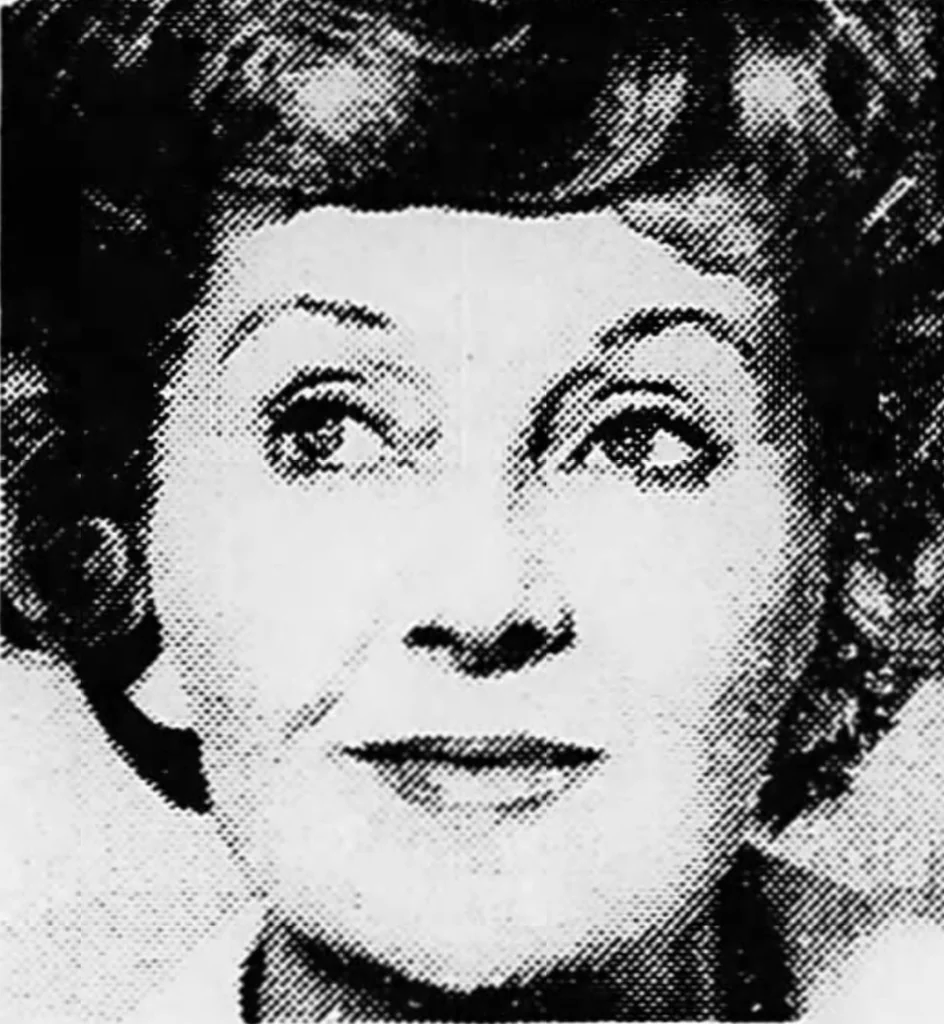
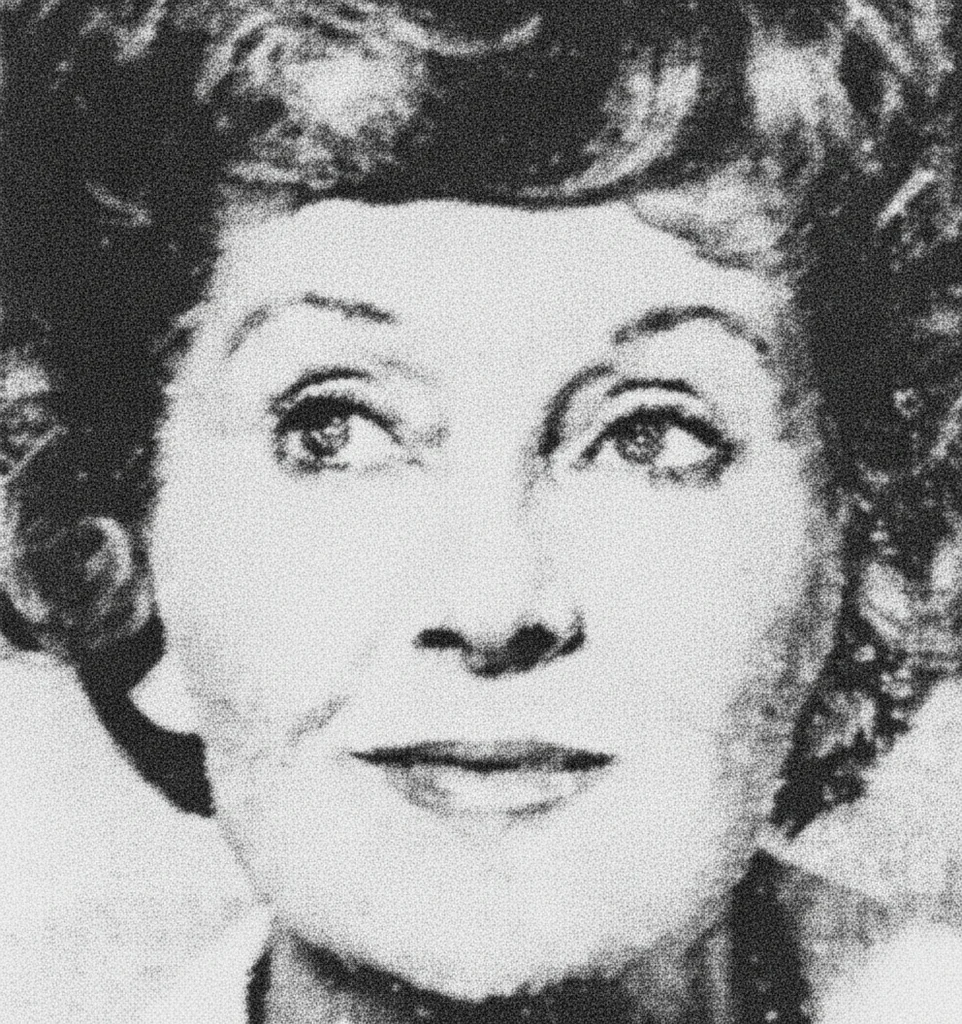
C8. Newspaper halftone dots - fail
The halftone was not eliminated. The coarse newsprint rosette is replaced by a finer dither rather than continuous tone, so the frame is still visibly dotted, and her mouth and cheek are distorted with a smudge that is not in the input. Source: File:Nan Hutton.jpg (Public domain, Wikimedia Commons). Success condition set in advance: The halftone rosette pattern is eliminated across the whole frame and replaced with continuous tone, with her facial structure preserved.
Remove the printed dot pattern from this newspaper photo and restore it to look like a smooth photographic print. Keep her face exactly as it is.
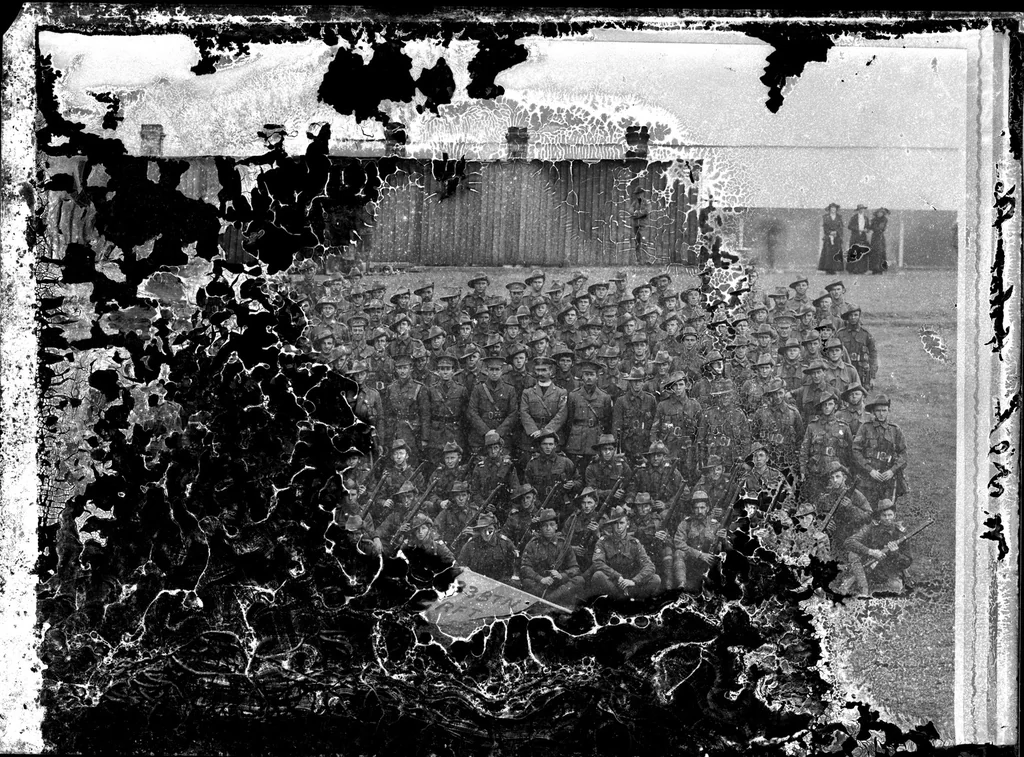
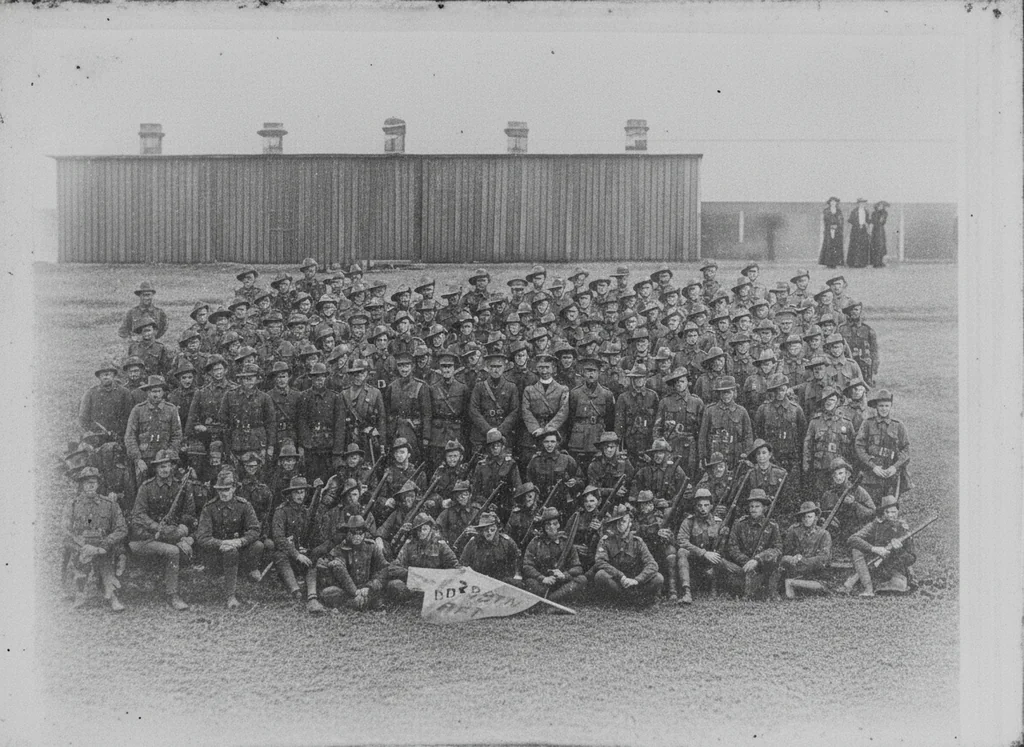
C9. Group photo with severe damage - pass
Passes its stated condition - the flaking is gone and the faces in the undamaged right-hand portion survive - but the condition was too narrow and missed the real problem: the black damage on the left concealed the ranks entirely, and the output fills that third with roughly forty invented soldiers. Scored as written, flagged as a rubric failure of ours as much as a product limitation. Source: File:33rd Battalion, Rft Unit photo, -n.d.- (11832577896).jpg (Public domain, Wikimedia Commons). Success condition set in advance: The flaking damage is repaired AND the faces outside the damaged region are preserved rather than regenerated - checked by comparing a sample of undamaged faces.
Restore this damaged group photograph. Repair the areas where the photo surface has lifted and flaked, even out the tone, and keep every person's face as it is.
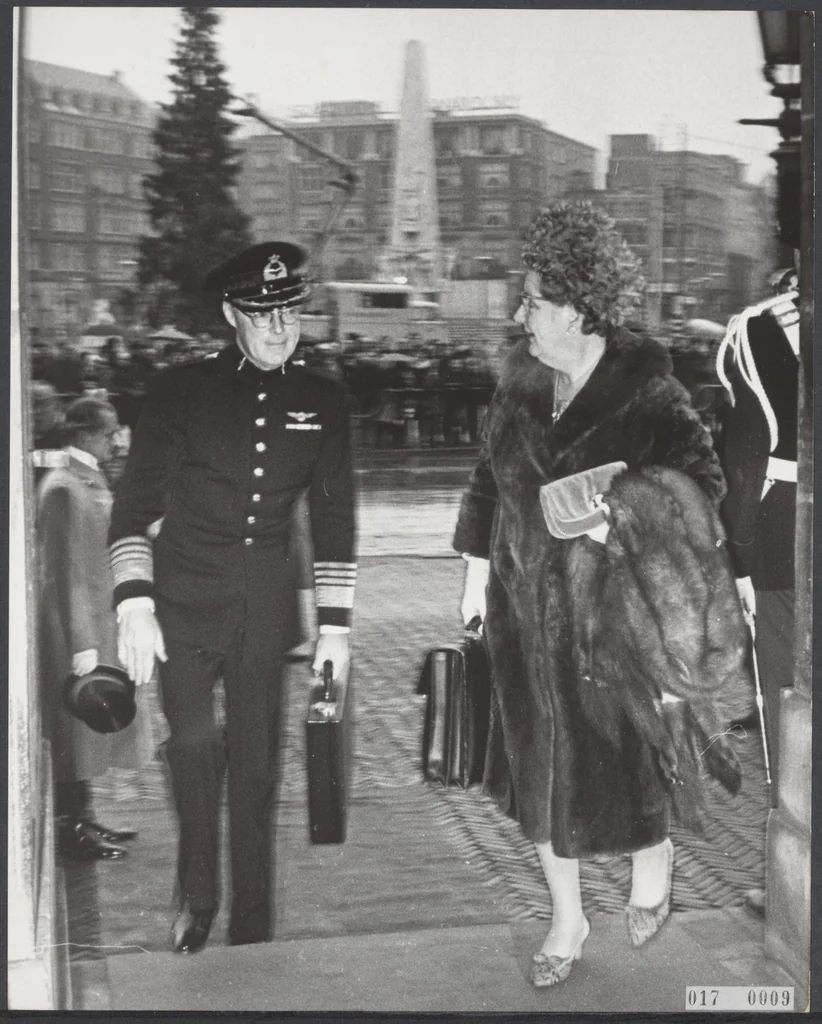
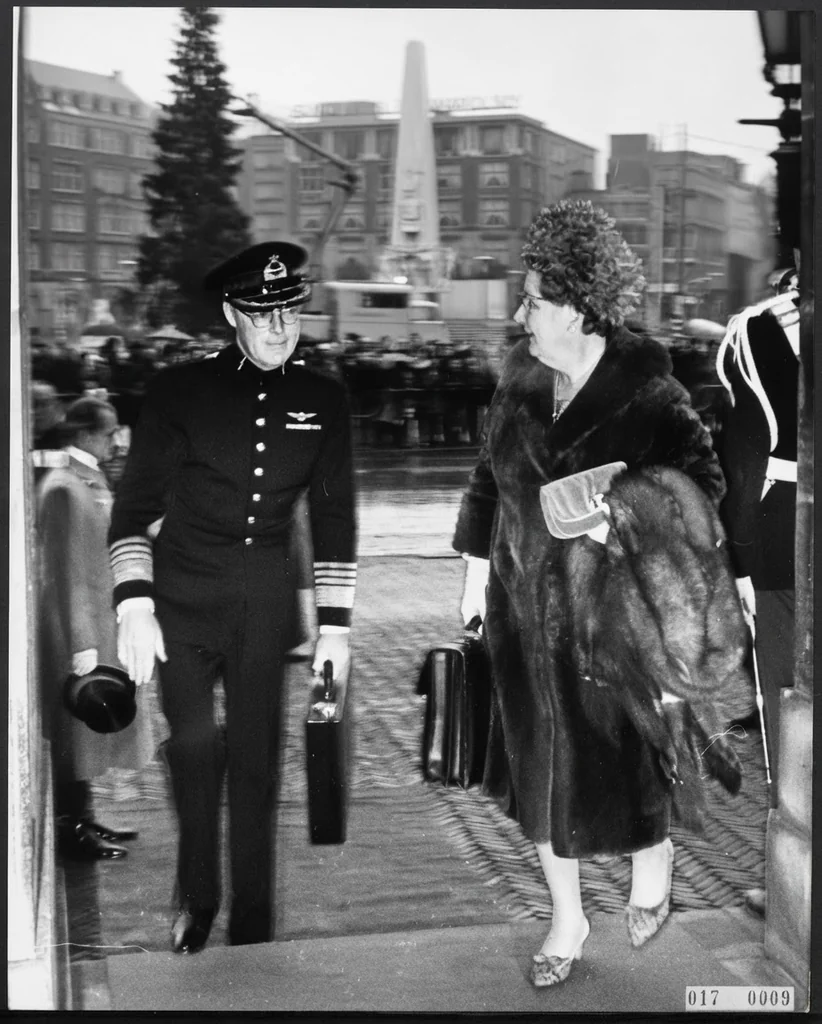
C10. Motion blur / out of focus - pass
Main subjects are measurably sharper - buttons, insignia and the crowd behind all gain definition - and neither face is swapped for a different identity. The man's body geometry drifts noticeably: he is rendered slimmer and longer-legged than the input. Source: File:Foto is onscherp, Bestanddeelnr 017-0009.jpg (CC0, Wikimedia Commons). Success condition set in advance: The main subjects become measurably sharper with recoverable detail, and no face is replaced with an invented identity.
Sharpen this blurry out-of-focus photograph. Recover the detail in the faces and keep everyone's features the same.
Where restoration broke down, and where it invented
It invents faces where damage destroyed them (case C1 - failed)
Why: In the most heavily damaged portrait in the set, scratches and staining had dissolved all three sitters' faces. The output returned three sharp, specific, entirely plausible faces - none of which can be read in the input. It is the most visually impressive result in this whole test and the one we would most warn people about.
Never treat a restored face as a record of what someone looked like. If the face is not legible in the original, what comes back is a guess wearing a lot of confidence.
A tear was relocated rather than repaired (case C2 - failed)
Why: The crack running across the man's body was repaired convincingly, but the photograph came back still visibly torn: a large white missing-emulsion region remained in the lower right, larger and differently shaped than the damage in the input.
Physical loss - actual missing paper or emulsion - is the weakest area. Expect partial results and check the whole frame, not just the area you were watching.
Newsprint halftone was not cleared (case C8 - failed)
Why: The coarse rosette dot screen was converted into a finer dither instead of continuous tone, so the frame still reads as printed dots, and the subject's mouth and cheek acquired distortion absent from the clipping.
For clippings, expect to do a second pass or accept a dotted texture. This is the weakest of the ten categories.
One case passed that arguably should not have - our rubric was too narrow (case C9)
Why: The damaged battalion photograph scored a pass because its condition asked only that undamaged faces survive, and they did. But the black damage had concealed the left third of the ranks entirely, and the output filled that area with roughly forty invented soldiers. The condition simply did not test for that, which is a flaw in how we wrote the test as much as in the tool.
We are leaving the pass as scored rather than rewriting the rubric after the fact. Read that case as a demonstration of invention at scale, not as a clean success.
Bodies and proportions can drift even when faces hold
Why: In the motion-blur case the faces stayed recognisable and detail genuinely improved, but the man's build was re-rendered noticeably slimmer and longer-legged than in the input.
Check posture and proportions, not only faces, when judging whether a restoration is faithful.
Questions about this test
Does AI restoration invent detail that was not in the photo?
Yes, and this is the most important thing on this page. In case C1 the damage had dissolved three sitters' faces; the output returned three sharp, specific faces that cannot be read in the input at all. We scored it a failure for that reason. Treat a restored face as a plausible reconstruction, never as evidence of what someone looked like.
Can it colourise a black-and-white portrait?
Yes - this was one of the cleanest passes. Case C5 gave skin, an indigo robe, gold braid trim and the stone building behind it all plausible distinct colour, with no grey patches left over and no colour bleeding across the boundary between garment and skin.
Will it fix a torn photograph with a missing piece?
Not in our test. Case C2 repaired the crack crossing the man's body but left a large white missing-emulsion area in the lower right, differently shaped and larger than the original damage. The tear was effectively moved rather than mended.
Does it work on newspaper clippings?
It struggled. In case C8 the coarse halftone screen was replaced by a finer dither rather than by continuous tone, so the frame still reads as dotted, and the subject's mouth and cheek picked up distortion that is not in the clipping.
How bad can the input be and still be worth trying?
Very bad, for detail recovery. Case C7 started from a 234-pixel scan and resolved individual beard hairs, the eyes and a cameo brooch while keeping the man recognisably himself. Low resolution recovered far better than physical damage did.
Popular use cases
Test it on your own photo
Same editor, same settings we used above.
Upload Your Photo